

Explainer
What is impermanent loss, and how to actually track it
You added liquidity to a pool, and the “fees earned” number keeps ticking up. It feels like free money. But there is a cost sitting right next to those fees that most liquidity providers never measure, and it can quietly wipe out the gains: impermanent loss.
Here is what impermanent loss actually is, in plain terms, and how to track it on your real positions instead of guessing.
What impermanent loss actually is
When you provide liquidity to a pool of two assets, the pool rebalances as their prices move: it sells the one going up and buys the one going down to keep the ratio. So if one asset moons, you end up holding less of it than if you had simply kept both in your wallet. That gap, between what your Liquidity Pool position is worth and what the same two assets would be worth if you had just held them, is impermanent loss.
It is “impermanent” because it only locks in when you withdraw; if prices come back, it shrinks. On concentrated Liquidity Pools (like Uniswap V3) it bites harder, because your liquidity is focused in a price range.
A quick example: you provide ETH and USDC. ETH doubles. The pool sold your ETH into USDC on the way up, so you now hold less ETH than if you had just held. Your fees might be +$120, but if impermanent loss is -$2,100, you are down $1,980 versus holding, even though the “fees earned” number looked great.
Why “fees earned” lies
Fees earned only tells you one side. The honest question is net versus holding: fees minus impermanent loss. Most trackers show the fees and the current value, but not the comparison, so a Liquidity Pool that is actually underwater can still look like a winner.
How to track impermanent loss on your real positions
Uniqueledger computes real impermanent loss on your concentrated Liquidity Pool positions: realized and unrealized IL, the fees you have earned, and the bottom line, net versus hold. So you can see whether the position actually beat just holding, instead of hoping it did.
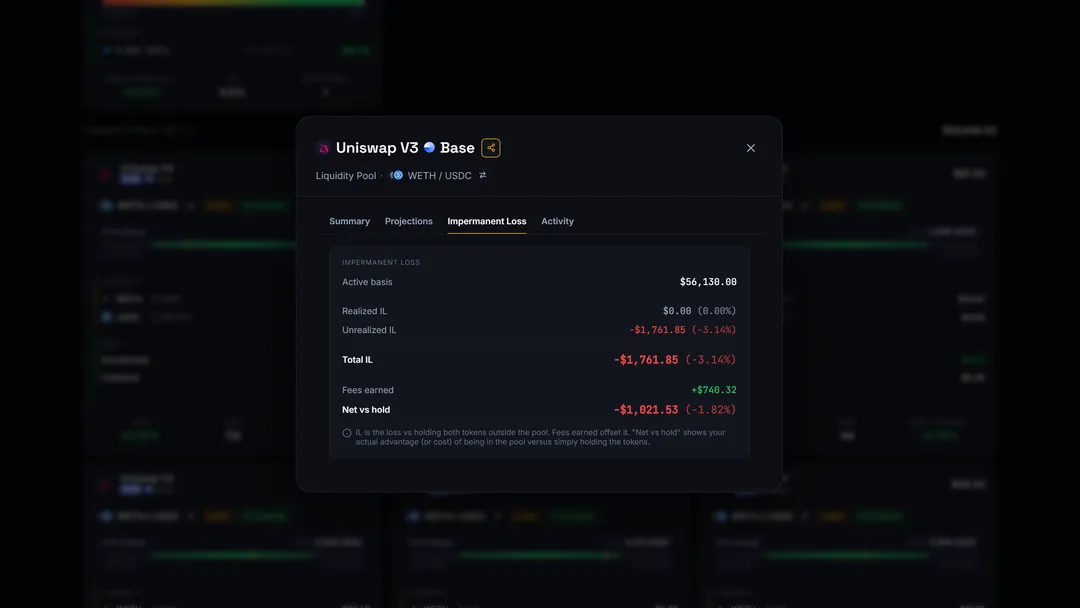
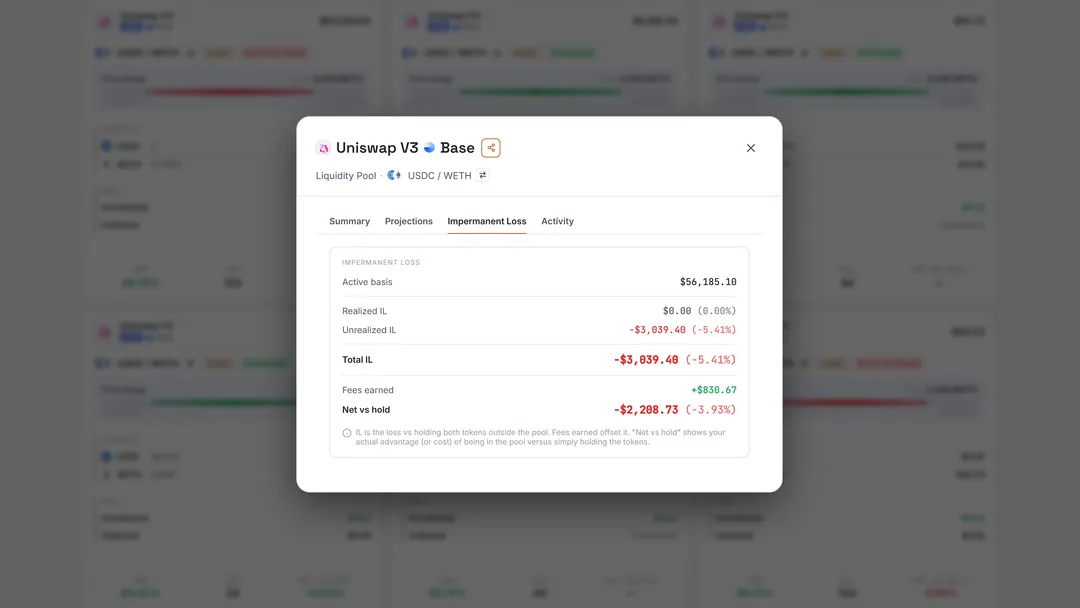
See the real result on your Liquidity Pools →
It sits inside the full Liquidity Pool position, so the range, the fees and the impermanent loss are all in one place, not spread across a block explorer and a spreadsheet.
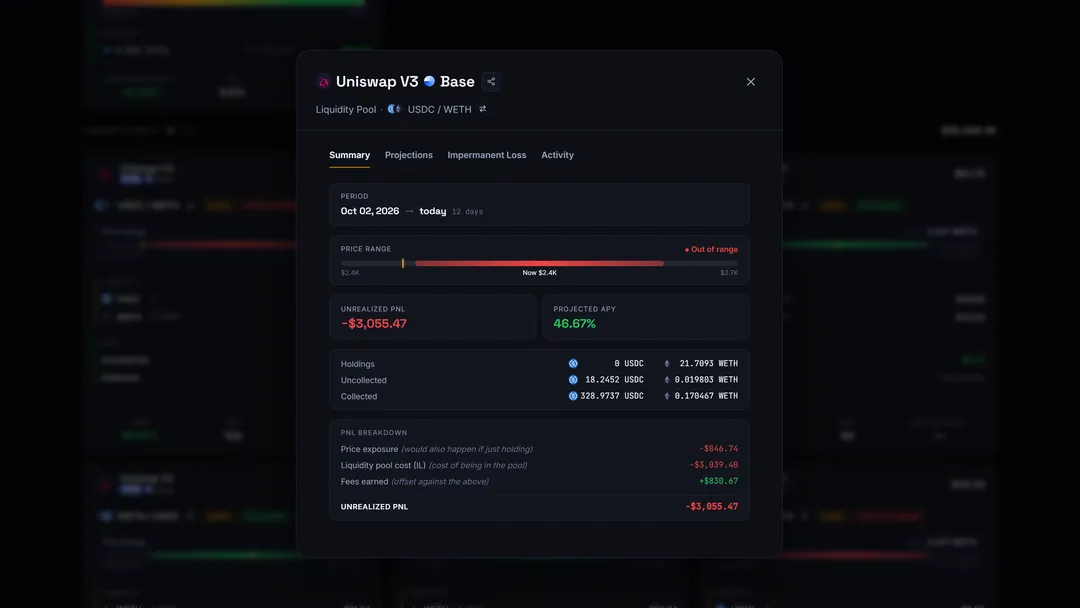
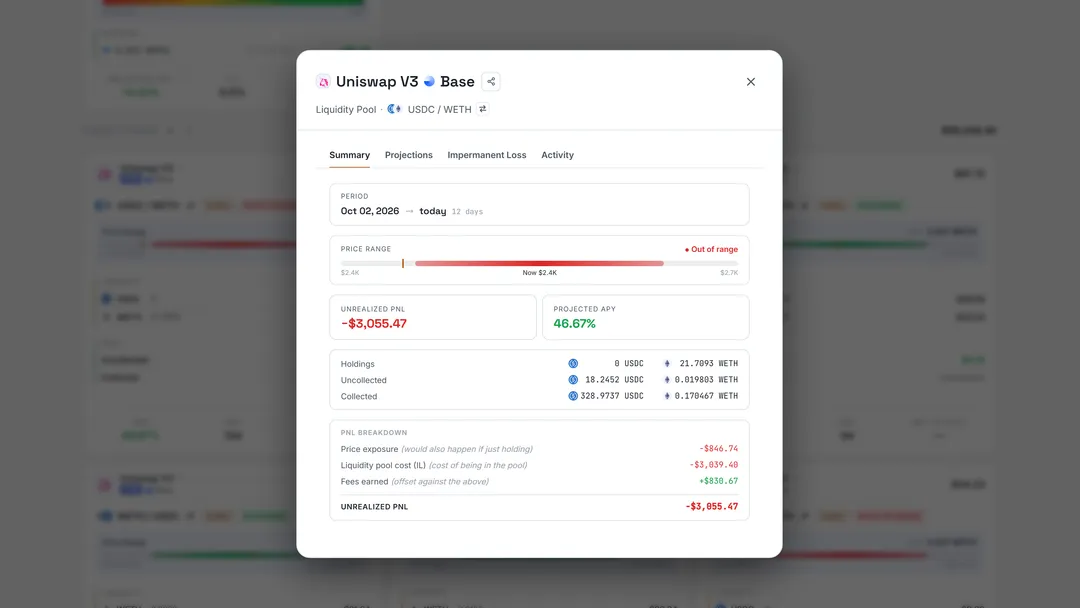
Because it is read from the chain, you can check impermanent loss on any Liquidity Pool wallet, and see it next to all your positions in one place.